
AIRWAY CARE · SLEEP HEALTH
Understanding CPAP
A guide to getting started, finding a comfortable fit and knowing when to ask for help.
If CPAP has been recommended for you, there can be a lot to take in. This guide explains the basics and helps you prepare questions for your treating clinician and equipment team.
What does CPAP do?
In obstructive sleep apnoea, the upper airway repeatedly narrows or closes during sleep. Continuous positive airway pressure (CPAP) supplies pressurised room air through a mask to help hold that airway open.
CPAP controls the obstruction while you use it; it does not cure the underlying condition. Your doctor or sleep specialist decides whether it is appropriate and recommends a treatment plan. Do not change prescribed pressure settings without their guidance.
Not yet assessed? Talk with your GP about your symptoms. Our home sleep studies page explains the assessment pathway.
Get to know your equipment
- Machine: produces the airflow. Fixed-pressure CPAP delivers a set pressure; auto-adjusting PAP varies it within prescribed limits.
- Tubing: connects the machine to your mask.
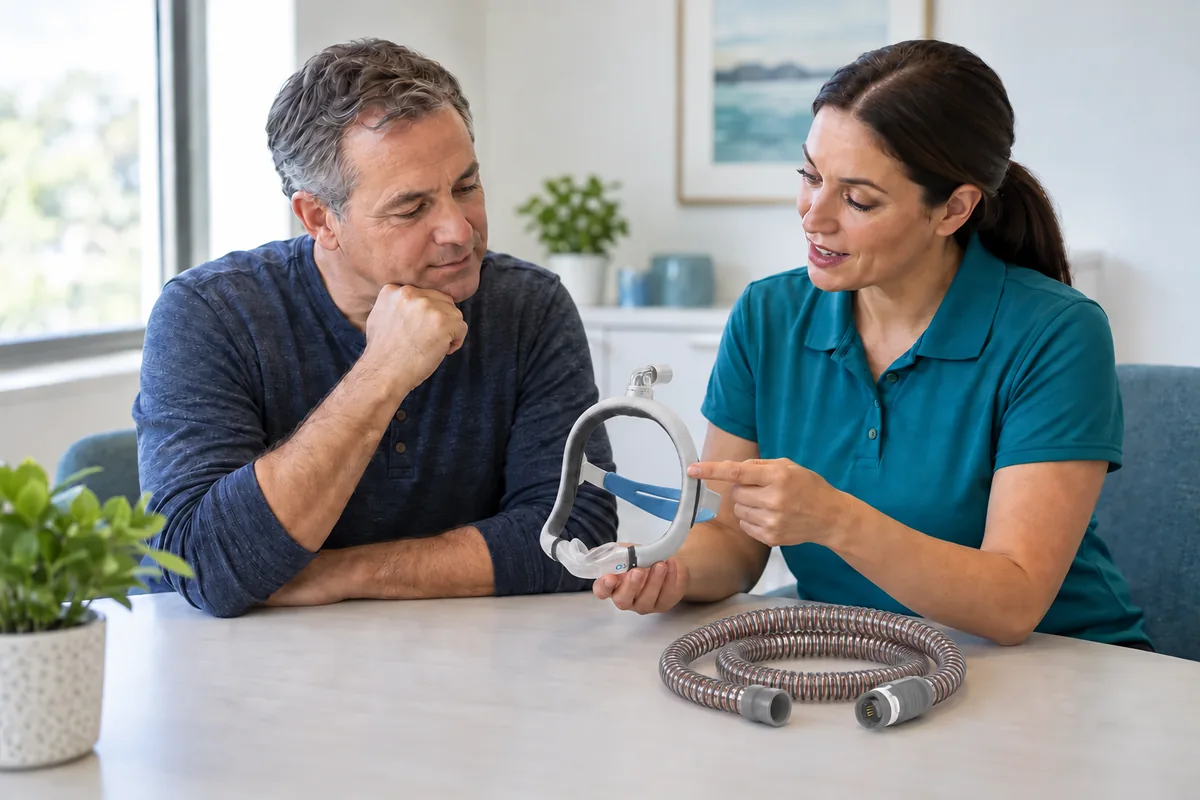
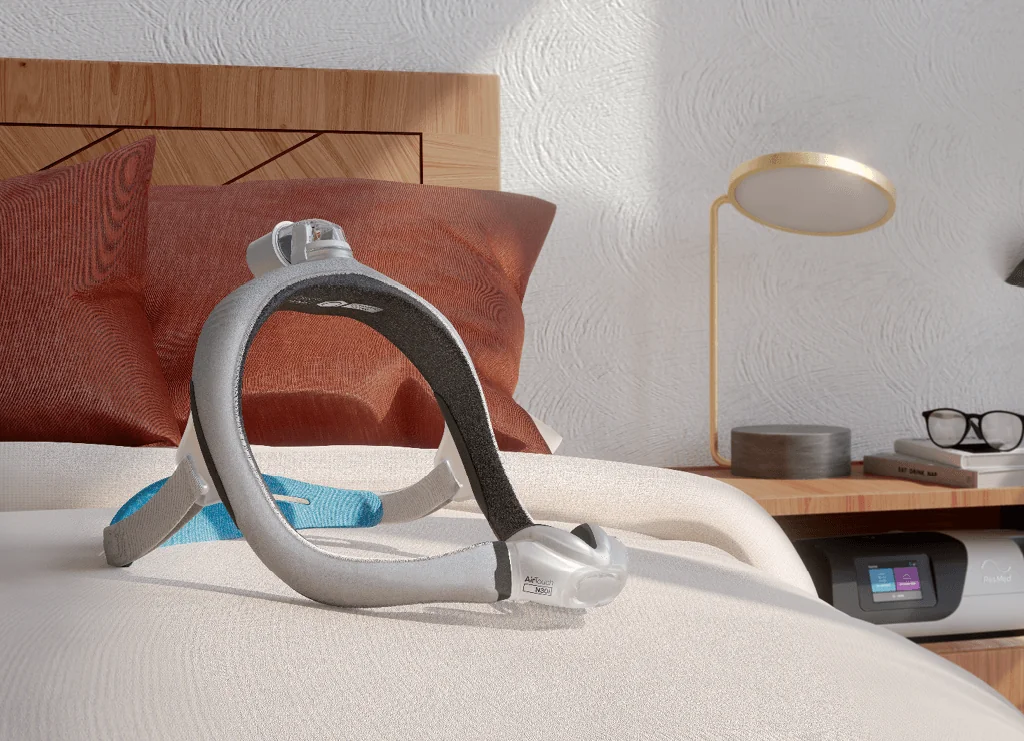
- Mask and headgear: deliver the airflow and hold the mask in place. Designs include nasal, nasal-pillow and full-face options.
- Humidifier, where fitted: adds moisture to the airflow and may help with dryness.
The right setup depends on your clinical needs and comfort, not just the newest device or the lowest price.
Questions to ask before your first night
- Can you show me how to put on, remove and reconnect the mask?
- How should the mask feel when the machine is running?
- Which comfort controls may I adjust, and which settings must stay as prescribed?
- Where are the cleaning instructions for this particular equipment?
- Who should I contact if I have a problem, and what follow-up is included?
Bring your questions to an appointment. Before buying equipment, confirm the price, what is included and the available support.
Comfort matters — ask for help early
Getting used to CPAP can take patience. Follow your treatment plan and aim to use it whenever you sleep, including naps. If you struggle to keep it on, let your treating team know so they can help identify the difficulty.
Air leaks or pressure marks
A persistent leak may relate to fit, size, assembly or worn parts. Tightening straps harder is not always the answer and can cause discomfort. Ask for a mask review if leaks, soreness or marks continue.
Dryness or a blocked nose
Discuss these symptoms with your treating team. They can review mask fit, humidification and other possible causes. Do not assume you need to change your treatment pressure.
Still sleepy despite using CPAP?
Arrange a review with your clinician. How you feel, how consistently you use treatment and information recorded by the device can help guide that discussion. A machine’s summary alone is not a complete medical assessment.
Build a manageable care routine
Use the manufacturer’s instructions for your exact mask, tubing, humidifier and machine: care requirements differ between products. Ask for a demonstration if anything is unclear.
Check for worn headgear, damaged cushions and cracks or tears in tubing. Avoid harsh cleaning products that could damage components or leave residue. Allow washed parts to dry as instructed before reassembly.
Planning time away? Include your CPAP equipment in your packing plan and discuss any practical concerns with your equipment team before travelling.
Your next step with Airway Care
Read about our CPAP machines, mask fitting and equipment support, or contact us to discuss an appointment. If you already use CPAP, tell us the machine and mask models and what you need help with.
This guide provides general information, not individual medical advice. Follow your treating clinician’s advice and the instructions supplied with your equipment.